A session rarely starts with words. It starts with a nervous system. I have seen a client’s shoulders drop twenty minutes in, after we dimmed the lights and he found a steady rocking rhythm in a chair. I have watched a teenage girl stop shredding her cuticles once she had a textured fidget and a weighted lap pad. Only then could we speak about panic, grief, or the incident in the school hallway. Regulation first is not a slogan. It is a sequence problem, and it is central to effective neurodivergent therapy.
When a client’s sensory system is out of sync, cognitive strategies slip off like rain on a waxed jacket. Attempts at insight, exposure, or conflict repair in couples therapy fall flat if the body is bracing. The task is not to suppress sensation but to align it enough that a person can choose. That is what regulation looks like in practice.
What regulation means in neurodivergent therapy
The nervous system has several dials, and sensory input turns many of them. Proprioception tells you where your body is. Vestibular input from the inner ear guides balance and motion. Interoception tracks hunger, temperature, and heartbeat. For many autistic and ADHD clients, these channels run either too loud or too quiet. Some stand in grocery stores stunned by buzzing fluorescents. Others need movement every few minutes to think clearly.
Therapists often talk about the window of tolerance, the range in which a person can feel without flooding or shutting down. Sensory strategies shift the window’s edges. Heavy work and deep pressure nudge the floor up. Overhead lighting, perfume, or crowded rooms push the ceiling down. Regulation is less about calm and more about access. When a client is regulated, they can notice, decide, and act without fighting their body.
This is not a purely psychological issue. Metabolism, sleep, pain, and immune function influence it. Autistic burnout, for instance, is often a sensory and executive crash worsened by social masking. Trauma history complicates the picture. A client may flinch at light touch not only due to tactile sensitivity but because of an assault. Good trauma therapy considers both. It is rarely either or.
Mapping the sensory profile
I no longer assume what helps until I have a sketch of a client’s sensory profile. I ask for stories. Where do they thrive, where do they shut https://www.fuzzysockstherapy.com/groups down, what do mornings feel like, what happens in the shower, what music helps or hurts. Standardized tools exist, and collaboration with an occupational therapist can be invaluable. Even so, a brief conversational screen quickens the work, especially in the first two sessions.
- What sensations restore you when the day has been hard, and what reliably drains you within minutes? Which environments sharpen your thinking, and which ones blur it? How do you know you are hungry, overwhelmed, or tired, and what are the first body signs? What kind of movement steadies you, and how much is too much? Which textures, sounds, lights, or smells are deal breakers in public spaces or at home?
Patterns emerge. A client who loses time on the couch at 3 pm but focuses well after a brisk walk may need proprioceptive input before therapy. Someone who jumps at HVAC clicks may benefit from a white noise buffer. A child who chews shirt collars might respond to a chewable necklace and crunchy snacks. This is practical, not precious. The aim is to turn a few dials so that the rest of therapy can begin.
I also look for medical and practical constraints. If a client has Ehlers‑Danlos hypermobility, heavy joint loading may hurt more than help. If they live with POTS, quick position changes can cause dizziness. If they parent two toddlers and have one outlet-free corner in the apartment, the sensory plan must fit that reality. I want devices and routines that live in the world, not in a wish list.
Building a regulation toolkit that works outside the clinic
Clinics can be softened. You can swap bright bulbs for warm 2700 K LEDs, keep a stash of earplugs and over‑ear headphones, add a small HEPA filter for clients with smell sensitivity, and offer varied seating. Weighted lap pads, 5 to 10 pounds depending on body size and client preference, often settle busy legs. Cheap textured items like therapy putty and silicone rings meet the hands that want to work.
Many clients need movement before or during session. I sometimes start with two minutes of wall push‑ups or a slow isometric press, palms against palms, because strong proprioceptive input increases a sense of containment. Gentle rocking in a chair helps some, but rocking can escalate agitation in others if vestibular input is a trigger. Trade-offs matter. A ten minute walk outside can do more than a thirty minute debate about motivation.
Breath is tricky for some neurodivergent clients. Counting or forcing longer exhales can set off gag reflexes or evoke past medical trauma. I often suggest low‑demand breath shapes like humming on the exhale, or sips and sighs that ride the body’s natural tide. A client who cannot tolerate diaphragmatic cues may relax with a straw or a hot drink, because the posture shifts without language.
Sound is either the ally or the enemy. Pink noise blends into the background with less fatigue than white noise. Instrumental music at 60 to 80 beats per minute can entrain slower breathing. For clients with misophonia, masking specific frequencies is better than global volume. It pays to test playlists instead of assuming. I keep a simple laminated scale from 0 to 10 for auditory comfort, and we note it each session the way we mark SUDS in trauma work. Over a month, trend matters more than any single day.
Smell divides opinion. For some, a drop of peppermint on a cotton ball tightens focus. Others cannot stay in the room if someone wore perfume in the slot before theirs. I use unscented cleaners and allow only client‑controlled scents in single‑use formats. I learned that the hard way when a well‑meant diffuser lingered for hours and wrecked three sessions.
Finally, I name and normalize stimming. Hand flapping, leg bouncing, tapping, vocalizations, fidgeting, and gaze aversion are regulation strategies. Suppressing them undercuts therapy. In couples therapy, we negotiate visible stims so that partners do not misread the behavior as disinterest or contempt. In child therapy, I model it openly. Kids are quick studies when an adult shows respect for their body’s language.
Trauma therapy with a sensory foundation
Trauma therapy for neurodivergent clients succeeds when the preparation phase is rich and unhurried. Safety becomes more than a word. It is a repeatable felt experience tied to sensory anchors. I devote multiple sessions to building and testing anchors. A client learns to toggle between activation and a reliable state shift, not to erase feelings but to prove they have a brake and a steering wheel.
Pacing changes. We might work in shorter, more frequent exposures or cognitive pieces, ten to fifteen minutes within a fifty minute hour, punctuated by movement or deep pressure breaks. Language shifts from metaphor to concrete terms if figurative speech confuses. I often use visual scales and simple drawings. If a client has alexithymia, we track body sensations and actions first, then layer in emotion vocabulary over time.
Memory processing can stir sensory overwhelm. A client recalling a hospital ICU may be set off as much by beeping and antiseptic smell as by the event’s narrative. A trauma plan that lists likely sensory triggers, and countermeasures that match them, saves distress. Noise‑canceling headphones in session are not a barrier to connection. They can be the bridge that allows a client to remain present long enough to process.
Adapting EMDR therapy for neurodivergent clients
EMDR therapy offers structure, yet it assumes a client can tolerate bilateral stimulation and sustained attention. That is not always true. Good adaptations preserve the model’s bones while honoring the body in front of you.
I start by testing forms of bilateral input. Tactile tappers, alternating ankle buzzers, auditory panning, gentle eye movements drawn short and slow, or even bilateral tapping on shoulders with self‑administered butterfly hugs, each lands differently. Many autistic clients prefer tactile over visual due to light sensitivity. Others cannot tolerate tapping on their chest but do fine with alternating hand squeezes on their thighs. There is no single right choice. The client’s sensory profile sets the plan.
Targets come with more scaffolding. I build a clear container for intrusions and identify strong resourcing images that are sensory‑rich, not wordy. A client who cannot picture a beach might still recall the weighted feel of a winter blanket and the muffled quiet of a snowed‑in morning. That can hold more weight than a traditional safe place script.
Sets are shorter. I often run four to eight passes, then pause for orienting and a breath shape that the client has already practiced. On difficult days, we pendulate on purpose, spending time on resource installation before and after each small slice of processing. The memory still moves. We stay regulated enough to track it.
Cognitive interweaves lean concrete. Instead of abstract reframes, I might ask, what do your feet know right now, or what does the chair tell you. For ADHD clients, stacking a fidget or a stability cushion under EMDR work can harness restlessness rather than fight it. Through trial, we find the cadence that opens access without tipping over arousal. This patience pays. I have seen clients with long, stuck histories process cleanly once their sensory needs were met.
Couples therapy and shared regulation
In couples therapy, the engine often floods during conflict because one or both partners are already over their sensory thresholds. A non‑autistic partner may pursue eye contact and steady talk, unaware that direct gaze feels like a bright light. The autistic partner may stim or look away to stay present, which gets misread as stonewalling. Both feel disrespected.
I teach co‑regulation as a team skill. Partners script a brief pre‑conflict protocol that includes environment and body needs. They might dim lights, reduce background noise, and agree on posture, for example, side by side on a walk rather than face to face in a tight kitchen. They set time caps, then pause. One couple I work with spends the first three minutes of any hard talk sitting on the floor, backs against a couch, feet pressing into the rug. That body position evens out their nervous systems enough that words do not land like blows.
We also build sensory‑informed repair. Apologies that include understanding of the other’s body needs land differently. I hear, I am sorry I followed you down the hall and kept talking while you were covering your ears. Next time I will give you two minutes and meet you on the porch, please wave when you are ready. This is not coddling. It is precision. The effect is measurable in fewer fights and quicker recoveries.
If there are children, the home’s sensory ecology affects everyone. A dinner table free of bright overheads, with acceptable fidgets and chew options, allows longer and warmer mealtimes. Many families resist at first out of fear that flexibility will vanish. Over months, they often find the opposite. Once bodies feel considered, negotiation expands.
Child therapy, play, and parent coaching
With children, sensory regulation is both the medium and the message. I stock the room with crash pads, lycra tunnels, soft swings if the ceiling can hold them, and a range of textures. We start with movement more often than not. Ten minutes of proprioceptive play can make the next twenty minutes of storytelling or drawing productive. I watch closely. Some kids need heavy work to downshift. Others spin out with even mild vestibular input and do better with squeezing, squishing, and slow joint compressions.
Parents need a parallel toolkit. I teach simple routines that fit real mornings. While waiting for the bus, have your child push the wall five rounds of seven seconds each, then carry the backpack for twenty steps, then switch to you holding the pack but asking them to press their hands down on your shoulders while you squat. This builds a micro workout that calms, and it often trims the frantic edge from school drop off.
I coordinate with schools when possible. A child who can chew gum or use a chewy pencil topper in class may reduce shirt chewing at home. A movement pass at 10 am can save a meltdown at 11. Visual schedules, first then boards, and predictable transitions help kids who miss interoceptive cues. In therapy, we embed trauma work gently, often through story and art, and always with exits that are practiced, not improvised. A child who knows how to ask for three minutes in the cozy corner with a weighted blanket is less likely to bolt from the room.
When sensory strategies backfire
Sensory interventions are not neutral. They can overshoot or go stale. A weighted blanket that helps at 12 pounds may agitate at 20. A client who swears by spinning for focus might exacerbate motion sensitivity and wind up nauseated. Smells that ground one month may trigger migraines the next. The goal is to run small, time‑limited experiments and track effects.
Screens deserve special mention. Visual strobing and rapid reward cycles can make screens dysregulating for some autistic and ADHD clients. For others, certain games provide a flow state that quiets noise. I ask for specific data. Which apps, for how long, at what times of day, and what is the aftertaste in the body. A simple rule like, no new games after 8 pm, or ten minutes of heavy work before Minecraft, can change sleep and mood trajectories.
Medical factors complicate everything. ADHD medications may shift appetite and sleep, which in turn change interoception. Chronic pain can hijack bandwidth. Autistic clients with gastrointestinal issues often have elevated baseline arousal. We adjust the plan when the body changes. That humility prevents the common trap of blaming the client when a strategy stops working.
How to know it is working
Progress shows up in small, repeatable ways. A client can notice early signs of overwhelm and do something that works eighty percent of the time. They can enter a grocery store and last fifteen minutes, not five. A parent sees fewer after‑school meltdowns and more play before dinner. In trauma therapy, SUDS peaks flatten and resolve faster. In EMDR therapy, sets become smoother with fewer sensory breaks, or the breaks become briefer and more effective.
I routinely track three simple indicators across weeks:
- a daily 0 to 10 rating of overall nervous system comfort, named in the client’s own words a yes or no for whether the client used one planned sensory strategy that day a brief note on sleep quality or pain level
If, after thirty days, we see an uptick in comfort on at least 70 percent of days and a clear pattern of effective strategies, we know we are pointed in the right direction. If not, we revisit the plan, not the client’s willpower.
A practical sequence for integrating sensory work
For clinicians and families who want a starting scaffold, a light sequence helps. Keep it flexible, and revise when the body votes no.
- Stabilize the environment for fifteen minutes per day with one lighting change, one sound change, and one seating or posture adjustment. Identify two sensory anchors that are portable, for example, a fidget and a breath shape, and use them preemptively before stress peaks. Add one movement micro‑routine tied to a daily cue, like wall push‑ups before email or a brisk five minute walk before homework. Test modifications to core therapy, such as shorter trauma processing sets, tactile bilateral stimulation in EMDR therapy, or side by side walks in couples therapy. Review data every two weeks, keep what works 80 percent of the time, and retire the rest without blame.
This is not a cure, it is logistics. Over months, these small adjustments create a habitat in which therapy can do its job.
Cost, access, and DIY solutions
Specialized sensory gear can be expensive. You do not need a therapy catalog to start. A bag of dried beans in a pillowcase makes an effective lap weight. Resistance bands cost little and can anchor to a doorknob for quick pulls and presses. A rubber jar opener serves as a pocket tactile tool. Earplugs and a simple headband often help more than premium headphones in tight budgets. Libraries, community centers, and schools sometimes loan larger items like crash pads or swings.
Therapists can share resource lists that include low‑cost vendors and clear return policies. Try items for a week before committing. Many clients cycle through two or three failed tools before they land on what works. That is normal. The key is to frame it as exploration, not waste.
Judgment calls in the room
Clinical judgment matters. Some clients regulate best through silence and stillness, others through conversation and movement. One man I work with needs twenty minutes of assembly tasks before he can touch grief. He disassembles and reassembles a small gear toy at the start of session. His hands organize, and then his words follow. Another client wants to dive straight into trauma targets in EMDR therapy, then regulate on the back end with a hot tea and a five minute weighted sit. Both approaches respect regulation first, just in different sequences.
There are days when no amount of strategy makes deep work wise. Masking after a family holiday, a storm front that jacks up pain, a string of bad sleep, these can shrink anyone’s window. I do not force progress. We use the hour for body care and planning. Oddly, these restraint days often correlate with faster gains the next week. The body remembers respect.
Why this approach changes outcomes
I have seen marriages survive because partners learned that the argument was not about character but about a 3 pm crash driven by sensory and metabolic dips. I have watched teenagers rejoin classrooms once they had chewies, seating options, and predictable breaks. I have walked with veterans who finally processed hospital trauma in EMDR therapy after swapping visual saccades for slow tactile tappers and building a smell‑aware plan for the clinic. None of this erases grief or stops conflict. It makes change possible.
Regulation first is an ethical stance. It treats the body as a partner in care, not an obstacle. For neurodivergent therapy, it is also efficient. When sensation aligns, attention opens, and therapy lands. Trauma therapy slows and then moves. EMDR therapy adapts and still works. Couples therapy stops punishing bodies for trying to cope. Child therapy becomes play that heals rather than play that distracts.
The craft lies in the details. The way a room sounds at 3 pm in winter. The exact weight of a lap pad for a wiry nine year old. The timing of a movement break in a fifty minute hour. The phrase that names a stim without shaming it. The careful choice to stop processing five minutes early so a client can reassemble themselves before stepping back into fluorescent light. These decisions add up. Over time, they write a nervous system a kinder script, and that script lets a person’s life become bigger than their triggers.
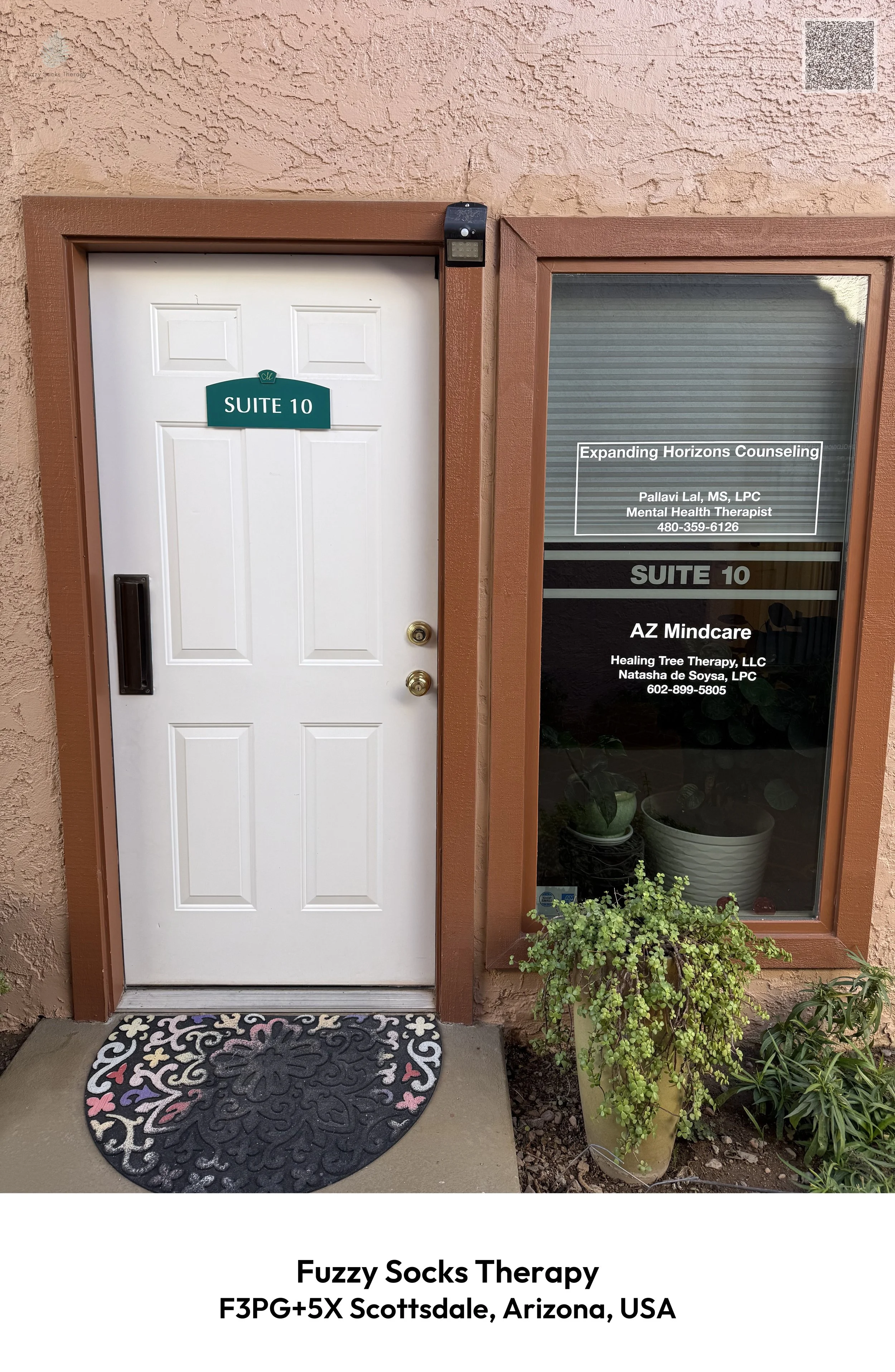
Address: 3295 N. Drinkwater Blvd., Suite 10, Scottsdale, AZ 85251
Phone: (720) 378-8454
Website: https://www.fuzzysockstherapy.com/
Email: [email protected]
Hours:
Monday: 9:00 AM - 5:00 PM
Tuesday: 9:00 AM - 5:00 PM
Wednesday: 9:00 AM - 5:00 PM
Thursday: 9:00 AM - 5:00 PM
Friday: 9:00 AM - 5:00 PM
Saturday: Closed
Sunday: Closed
Open-location code (plus code): F3PG+5X Scottsdale, Arizona, USA
Map/listing URL: https://maps.app.goo.gl/cqhwvXU4UMg6QL1YA
Embed iframe:
The practice offers in-person therapy in Scottsdale along with online sessions for clients in Arizona, Colorado, and Florida.
Clients can explore services such as trauma therapy, EMDR therapy, Deep Brain Reorienting Therapy, neurodivergent therapy, child therapy, couples therapy, discernment counseling, and parenting intensives.
Fuzzy Socks Therapy is especially relevant for people navigating trauma, dysfunctional family dynamics, ADHD, autism, relationship conflict, and emotional overwhelm.
The website presents a direct, practical therapy style focused on real tools and meaningful change rather than vague advice.
Scottsdale clients looking for trauma-informed psychotherapy can find support that combines deeper healing work with concrete skill building.
The practice also offers help for adult children of dysfunctional families, couples on the brink, and neurodivergent kids, teens, and adults.
To get started, call (720) 378-8454 or visit https://www.fuzzysockstherapy.com/ to book a free consultation.
A public Google Maps listing is also available for Scottsdale location reference alongside the official website.
Popular Questions About Fuzzy Socks Therapy
What does Fuzzy Socks Therapy help with?
Fuzzy Socks Therapy helps with trauma, dysfunctional family patterns, neurodivergence, relationship conflict, emotional overwhelm, and related challenges for individuals, couples, and families.
Is Fuzzy Socks Therapy located in Scottsdale, AZ?
Yes. The official website lists the office at 3295 N. Drinkwater Blvd., Suite 10, Scottsdale, AZ 85251.
Does Fuzzy Socks Therapy offer in-person and online sessions?
Yes. The official site says the practice offers in-person therapy in Scottsdale and online therapy in Arizona, Colorado, and Florida.
What therapy approaches are listed on the website?
The website highlights EMDR therapy, Deep Brain Reorienting Therapy, discernment counseling, play therapy, Dialectical Behavior Therapy, Emotionally Focused Therapy, and practical trauma-informed skill building.
Who provides therapy at Fuzzy Socks Therapy?
The official website identifies the therapist as Lianna Purjes.
Does the practice offer couples counseling?
Yes. The website includes couples therapy, couples intensives, and discernment counseling for couples deciding whether to stay together or separate.
Does the practice work with children and adolescents?
Yes. The site says the practice offers child therapy and support for children, adolescents, and their families.
How can I contact Fuzzy Socks Therapy?
Phone: (720) 378-8454
Email: [email protected]
Website: https://www.fuzzysockstherapy.com/
Landmarks Near Scottsdale, AZ
Drinkwater Boulevard is the clearest local reference point for this office and helps nearby clients place the practice in Scottsdale. Visit https://www.fuzzysockstherapy.com/ for service details.
Old Town Scottsdale is a familiar city landmark and a practical reference for people searching for therapy near central Scottsdale. Call (720) 378-8454 to learn more.
Scottsdale Civic Center is another recognizable local landmark that helps define the surrounding area for nearby professional services. The official website has current contact details.
Scottsdale Stadium is a well-known destination in the city and a useful point of reference for local users. Fuzzy Socks Therapy offers both in-person and online sessions.
Indian School Road is a major corridor that helps many residents orient themselves in Scottsdale. More information is available at https://www.fuzzysockstherapy.com/.
Fashion Square and the surrounding central Scottsdale area are widely recognized by local residents and visitors alike. Reach out through the website to book a free consultation.
Downtown Scottsdale is a strong local search reference for people seeking counseling and psychotherapy services in the area. The practice serves Scottsdale in person and multiple states online.
Scottsdale Road is another major route that helps define the broader service area for clients traveling from nearby neighborhoods. The practice supports individuals, couples, and families.
The Scottsdale arts and civic district is a useful area reference for those familiar with the city center. Visit the site to review specialties and next steps.
Central Scottsdale commuter corridors make this practice relevant for nearby residents who want in-person therapy, while online sessions add flexibility for clients in Arizona, Colorado, and Florida.